Fire detection and alarm systems (IDSAI) in Constanta
The right detector in the right place: smoke in rooms, temperature in the kitchen, suction in the server room, thermosensitive cable in the parking lot. Designed, installed and maintained by the same IGSU authorized team.
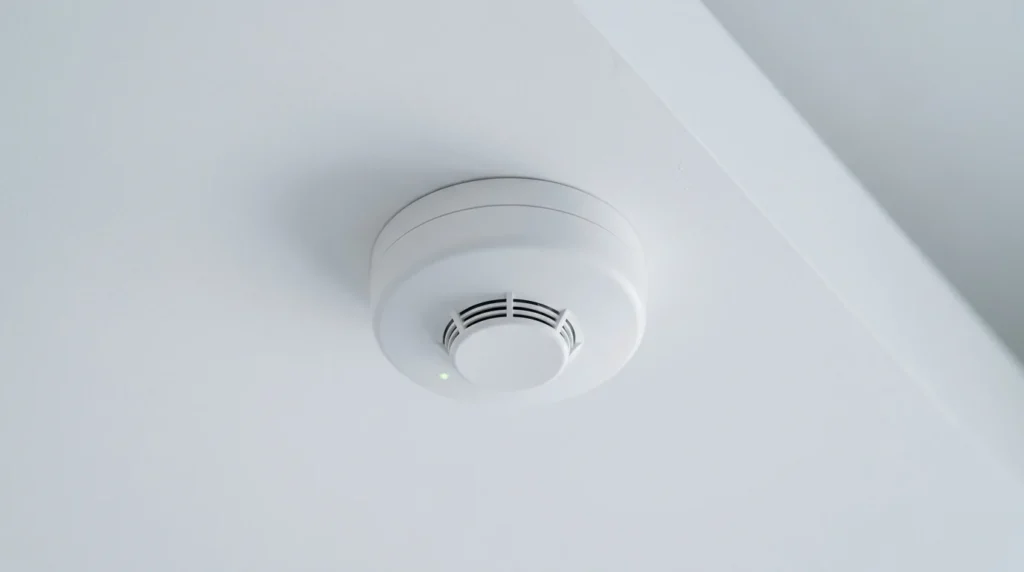
A detection system it must quickly identify a real event, clearly locate the area and correctly command the intended actions, without generating repeated alarms for avoidable causes.
GreenSoft designs and installs addressable or conventional systems, depending on the building and requirements. Risks, environment, heights, compartmentalization, maintenance access and interfaces with other installations are analyzed.
Programming follows the cause-effect matrix: alarm, control commands smoke exhaust, stops, unlocks, vocal evacuation and event transmission, as appropriate. Commissioning includes scenario testing and training of responsible personnel.
We also do design: the technical design of the detection and alarm installation, prepared by an authorized designer, correlated with the fire safety scenario and prepared for the ISU's approval and authorization. You can execute it with us or with another company.
Types of detectors we design and install
There is no universal detector. Each space has a likely type of fire (smoldering, flaming, dense smoke, gas) and an environment (dust, steam, height, temperature) that eliminates certain technologies. We choose the detector based on both:
- Optical smoke detectors (punctual): standard for offices, hotels, corridors and rooms; detects visible smoke from smoldering fires
- Temperature detectors: with fixed threshold or thermovelocimetric (reacts to rapid temperature increase); for kitchens, laundries, parking lots and dusty or steamy spaces, where smoke would give false alarms
- Multisensor detectors (combined): smoke + temperature, and if necessary + carbon monoxide, with algorithms that reduce false alarms; recommended in hotels, clinics and mixed-use spaces
- Flame detectors (IR, UV/IR, IR3): for flammable liquids, hangars, high-rise buildings, gas stations and areas where fire has a flame before producing smoke
- Gas detectors of various types: methane, LPG, carbon monoxide, hydrogen and other gases, with dedicated or integrated fire detection panels (details on the gas detection page)
- Detection by aspiration (ASD): a network of tubes continuously draws air into the analysis chamber and detects smoke long before point detectors; for server rooms, archives, museums, high-rise buildings and spaces difficult to access for maintenance
- Linear smoke detectors (optical barriers): one transmitter and one receiver or reflector covers up to 100 m; for industrial buildings, atriums, churches, sports industrial buildings and high ceilings, where point detectors would be too many or too high
- Linear temperature detectors with thermosensitive cable: a cable stretched along the entire length of the protected area, digital or analog (with location per meter); for cable tunnels, conveyor belts, parking lots, exhaust pipes, spaces with dust, moisture or corrosion
- Detectors for special environments: with high degree of protection for outdoors and moisture, for extreme temperatures or for areas with a risk of explosion, plus wireless detectors where wiring is not possible (heritage buildings)
- Manual buttons, sirens, optical beacons and modules control systems for doors, elevators, smoke extraction and extinguishing, which complement any system
All are connected to addressable or conventional panels, with the cause-effect matrix programmed according to the fire safety scenario, and are periodically checked as part of the maintenance contract.
What does the service include?
- Design: IDSAI technical project with authorized designer, for ISU approval and authorization
- Control panels and detection loops
- All types of detectors: optical smoke, temperature, multisensor, flame, gas, aspirating, linear smoke and with thermosensitive cable
- Programming and cause-effect matrix
- Interfaces with smoke extraction, doors, stops and PA/VA
- Testing, documentation and maintenance
Why GreenSoft
GreenSoft can test the entire chain, from detector and cable to the command transmitted to another system. This way, interface errors are identified before an incident or inspection.
How the project is progressing
- Analysis of the project and field conditions
- Equipment installation and wiring
- Programming logic and interfaces
- Scenario testing and documentation delivery
For which types of sites
- Hotels
- retail
- chow
- Warehouses
- OFFICE
- HOSPITALS
- schools
- parking lots and public buildings
Send us your plans or invite us to see your existing plant. You will receive the IDSAI project or audit and quote within 3-5 business days.
Where we work
We cover the entire county of Constanta: Constanta municipality, Mamaia, Năvodari, Ovidiu, Agigea, Eforie, Techirghiol, Mangalia, Medgidia and Cernavodă, including the port perimeter, based on the work license in the Port of Constanta. For larger works, we travel throughout Dobrogea.
Useful resources
- What does IDSAI mean and when the law requires one
- False alarms in fire detection: causes and solutions
- Which buildings need ISU authorization?
Frequently asked questions
What type of detector is placed in a high-rise building or warehouse?
Above 10-12 m, point detectors become ineffective and difficult to maintain. We use linear smoke barriers, aspiration detection or, for cable racks and tunnels, thermosensitive cable; in areas with flammable liquids, flame detectors. The choice is made on the project, according to height, stored materials and ventilation.
How do I avoid false alarms in the kitchen or in areas with dust and steam?
There are no optical smoke detectors, but temperature (thermovelocimetric) or multisensor with filtering algorithms; in spaces with dust or corrosion, thermosensitive cable. The wrong choice of detector type is the most common cause of false alarms.
What is the technical and practical difference between an addressable and a conventional fire panel?
With an addressable panel, each detector has its own address, so the system tells you exactly which detector has triggered an alarm and where, essential in large buildings for quick intervention. With a conventional panel, you only know the general area. Addressable offers precision and easier maintenance; conventional is suitable for small spaces.
How to prevent false alarms in dusty or steamy spaces (kitchens, production facilities)?
We use the right type of detector for each environment: thermal or multi-criteria in kitchens, dust-immune detectors in industrial buildings, avoiding optical detectors where they would trigger unjustifiably. Addressable panels also allow sensitivity adjustment by zones and intervals. This way you reduce false alarms without sacrificing safety.
Is a periodic maintenance contract for the fire detection system mandatory by law?
Yes. Fire detection and alarm systems require periodic inspection and maintenance by an authorized company, with written records, a requirement verified by ISU inspections. Without documented maintenance, you risk non-compliance and a system that does not work when needed. GreenSoft offers contracts with scheduled inspections.
What role does the fire control panel play in triggering other safety systems in the building?
The control panel is the brain of safety: in the event of an alarm, it can start smoke extraction, trigger automatic extinguishing, unlock the escape doors, stop ventilation, control the evacuation sound (PA/VA) and notify the dispatcher. We program all these scenarios in an integrated manner. This way, the building reacts in a coordinated manner, not in pieces.
How often should smoke detectors be tested by an authorized company?
Periodic checks are usually carried out at quarterly or semi-annual intervals for functional tests and annually for a complete check, according to the manufacturer's regulations and specifications. The detectors are cleaned and tested, and the control panel is fully checked. We establish the schedule through the maintenance contract.
Can an existing system be expanded?
Yes, if the switchboard, loops, licenses and equipment compatibility allow. The audit establishes the real limit.
Shall we discuss your project?
Free initial technical consultation and quote within 3–5 business days.