
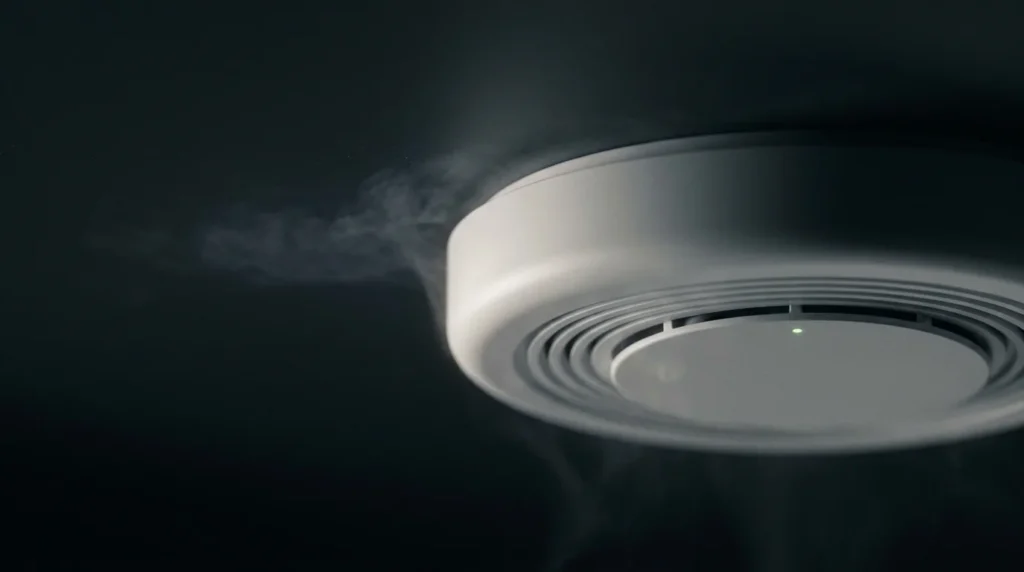
Why false alarms occur and how you can drastically reduce their number without compromising fire safety
A system of fire detection and alarm It must react quickly when there is a real fire. At the same time, it must not generate false alarms repeatedly.
Every false alarm means lost time, business interruption, unnecessary evacuations, employee stress and, in some cases, significant costs. If the problem persists, building occupants may begin to ignore the alarm signals, which is a major risk in the event of a real fire situation.
The good news is that most false alarms have technical or operational causes that can be identified and remedied.
In this article we present the nine most common causes and the recommended solutions.
1. Detectors mounted in inappropriate places
One of the most common problems is incorrect placement of detectors.
For example:
- near kitchens;
- near bathrooms or showers;
- near frequently opened exterior doors;
- next to the ventilation openings;
- near sources of steam or technological smoke.
In these situations, the detector may interpret steam, particles, or air currents as signs of a fire.
How to fix:
- verification of location according to the project and regulations;
- using the appropriate type of detector for the environment;
- Relocating detectors when justified.
2. Dirty detectors
Dust is one of the biggest enemies of optical detectors.
Over time, the following can accumulate in the optical chamber:
- dust;
- textile fibers;
- insects;
- deposits resulting from industrial processes.
These particles alter the sensitivity of the detector and can generate unjustified alarms.
How to fix:
- periodic cleaning;
- maintenance checks;
- replacing detectors that can no longer be recalibrated.
3. Wrong choice of detector type
Not every space needs to be equipped with an optical smoke detector.
In certain areas they are more suitable:
- temperature detectors;
- multicriteria detectors;
- detectors with combined sensors;
- special detectors for difficult environments.
Examples:
- kitchens;
- workshops;
- industrial buildings;
- parking lots;
- spaces with vapors or dust.
The right choice of technology significantly reduces the number of false alarms.
4. Construction or renovation work
During renovation work, the following frequently occur:
- dust;
- fine particles;
- smoke from tools;
- vapor;
- aerosols.
These can trigger detectors.
Good practice:
Temporary measures established by authorized personnel must be implemented before work begins so that fire protection is maintained without unnecessary exposure to false alarms. Any decommissioning of areas must be documented and managed through internal procedures.
5. Ventilation system problems
Strong air currents can influence the behavior of detectors.
Common situations:
- air vents placed too close together;
- changes to HVAC installation;
- dirty filters;
- imbalance of the air conditioning system.
In such cases, it is recommended to check both the HVAC installation and the location of the detectors.
6. Defective or aging equipment
Like any electronic equipment, detectors have a limited lifespan.
Over time, the following may occur:
- degradation of electronic components;
- sensor drift;
- failure of optical cameras;
- internal circuit problems.
Replacing end-of-life equipment is essential for the proper functioning of the system.
7. Improper configuration of the fire alarm panel
In the case of modern addressable systems, numerous parameters can be configured.
Examples:
- sensitivity thresholds;
- timings;
- alarm logic;
- multicriteria functions;
- filtering algorithms.
Incorrect configuration can cause false alarms or, conversely, insufficient sensitivity.
Configuration must be carried out exclusively by qualified personnel and in accordance with the design and manufacturer's recommendations.
8. Unauthorized interventions on the installation
Changes made without documentation and without complying with the project can affect the functioning of the entire system.
Examples include:
- moving detectors;
- replacing equipment with incompatible models;
- wiring modification;
- deactivation of some areas;
- changing parameters without testing.
Any intervention must be followed by functional checks and updating of technical documentation.
9. Lack of periodic maintenance
The most common cause of false alarms is lack of preventive maintenance.
During maintenance, the following are checked, among other things:
- operation of detectors;
- the level of contamination;
- communication with the central station;
- main and backup power supply;
- alarm devices;
- event history and possible repeated errors.
Periodic maintenance allows problems to be identified before they affect the operation of the building.
What NOT to do
In the face of repeated alarms, some seemingly quick solutions can compromise safety:
- covering the detectors with foil or adhesive tape;
- permanent deactivation of a zone;
- unjustified reduction of sensitivity;
- deactivation of sirens;
- ignoring error messages.
These measures can delay the detection of a real fire and have serious consequences.
How does modern technology reduce false alarms?
Current systems include advanced features such as:
- multi-criteria detectors (smoke, temperature and other parameters);
- automatic contamination compensation;
- adjusting sensitivity according to the environment;
- signal analysis algorithms;
- self-diagnosis and permanent monitoring;
- detailed log of events.
These technologies help reduce false alarms without diminishing the ability to detect real fires.
How GreenSoft can help you
GreenSoft designs, installs and maintains professional fire detection and alarm systems for commercial, industrial and institutional buildings.
Our services include:
- diagnosing the causes of false alarms;
- checks and preventive maintenance;
- cleaning and testing of detectors;
- replacement of worn-out equipment;
- reconfiguration of addressable systems;
- modernization of existing facilities;
- training of personnel on the correct operation of the system.
Interventions are carried out by authorized personnel, in compliance with technical documentation and applicable legal requirements.
Conclusion
False alarms are not just a nuisance. They affect the organization's business, reduce occupant confidence in the system, and can hide technical problems that, over time, compromise the level of fire protection.
In most cases, the causes can be identified through a technical analysis and remedied by choosing the right detectors, correctly configuring the control panel and performing quality periodic maintenance. A well-designed and maintained system will react promptly when there is a real danger and will limit unjustified alarms to a minimum.
You need fire detection and alarm systems in Constanta? Request a quote →