Smoke extraction and exhaust systems
Ensures the safe evacuation of people and an accessible corridor for the ISU intervention.
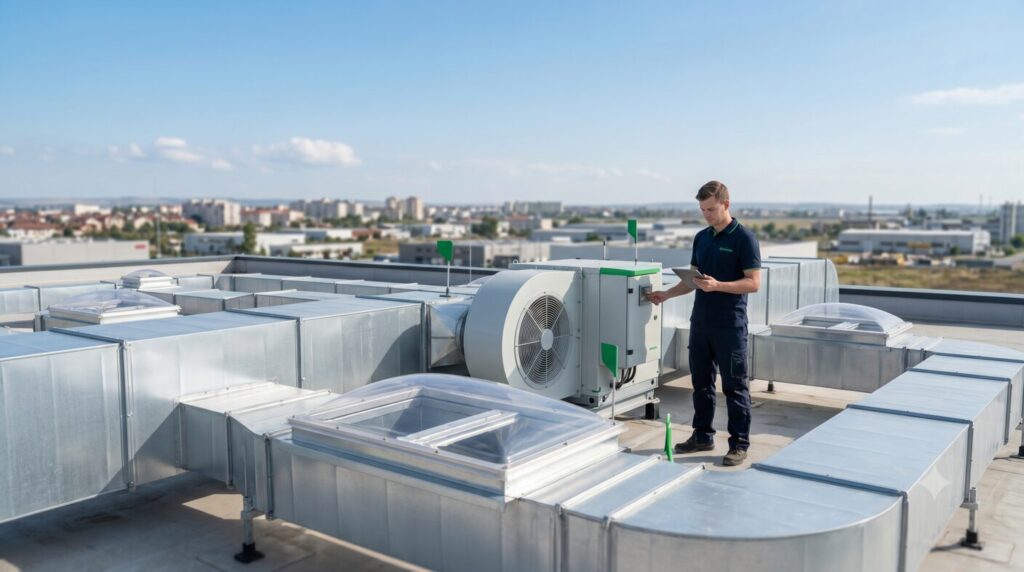
In a fire, smoke quickly affects visibility, evacuation and intervention. The system smoke exhaust must open or start exactly what the script states, in the correct order.
GreenSoft implements the control and automation of natural or mechanical smoke extraction systems, in coordination with the designers and specialists involved. The solution can include hatches, windows, fans, dampers, panels, sources, buttons and signals.
Integration with fire detection is verified through scenarios: zones, openings, starts, confirmations, stops and returns. Periodic testing tracks not only the electrical signal, but also the actual movement or operation of the controlled elements.
What does the service include?
- Controls for hatches and smoke extraction windows
- Fans, dampers and automation panels
- Power supplies and manual controls
- Integration with detection and cause-effect matrix
- Functional tests and maintenance
Why GreenSoft
The GreenSoft team can simultaneously verify automation, power, detection, and interfaces. This reduces the risk that each component reports normally but the physical scenario does not fully execute.
How the project is progressing
- Review of the scenario and smoke-free areas
- Defining commands and confirmations
- Installing and integrating components
- Scenario testing and recording results
For what types of goals
- Shopping centers
- hotels
- CAR PARKS
- chow
- atria
- ladder houses
- warehouses and public buildings
Request integrated smoke exhaust testing to verify the complete chain between detection, control and the actuated element.
Useful resources
Frequently asked questions
What is a smoke extraction system and what is its main role in the event of a fire?
Smoke extraction removes smoke and hot gases from the building, keeping escape routes visible and breathable, and protecting stairwells. Since most fire fatalities are caused by smoke, not flames, smoke extraction effectively saves lives. It also helps firefighters intervene.
How are smoke exhaust hatches operated (electric, pneumatic) and what type is recommended?
Hatches can be operated electrically (with motors) or pneumatically (with CO2 cylinders). Electric systems are the most used today, being easy to integrate with the fire control panel, testable and reversible (also useful for daily ventilation). We recommend the type depending on the building and the project requirements.
What happens to smoke exhaust vents if the building's power supply is interrupted?
The systems are equipped with backup sources (batteries/UPS) that ensure the hatches open even without the network, exactly when needed. Many hatches are designed to open safely in the absence of the command. This way, the smoke extraction works even in the scenario where the fire has affected the power supply.
Are smoke exhaust windows an ISU-accepted solution for office buildings or stairwells?
Yes, natural smoke extraction through motorized windows and hatches is a recognized solution, frequently used for stairwells and office buildings, when correctly designed and sized. The project establishes the surfaces and location according to the regulations. GreenSoft designs and executes with IGSU authorization.
How often should the opening mechanisms and motors of smoke extraction hatches be checked?
The mechanisms are checked periodically (usually every six months or annually) by full opening tests and checking the motors, batteries and controls. The exposed moving components must be maintained in guaranteed working condition. We include these checks in the periodic maintenance, with the documentation for the check.
Is smoke extraction the same as normal ventilation?
No. It can use some common components, but has scenarios, power supplies, and requirements specific to fire situations.
Is only the signal from the control panel being tested?
It is not enough. The test must confirm, within the limits of the procedure, the operation of the ordered elements and their feedback.
Shall we discuss your project?
Free initial technical consultation and quote within 3–5 business days.